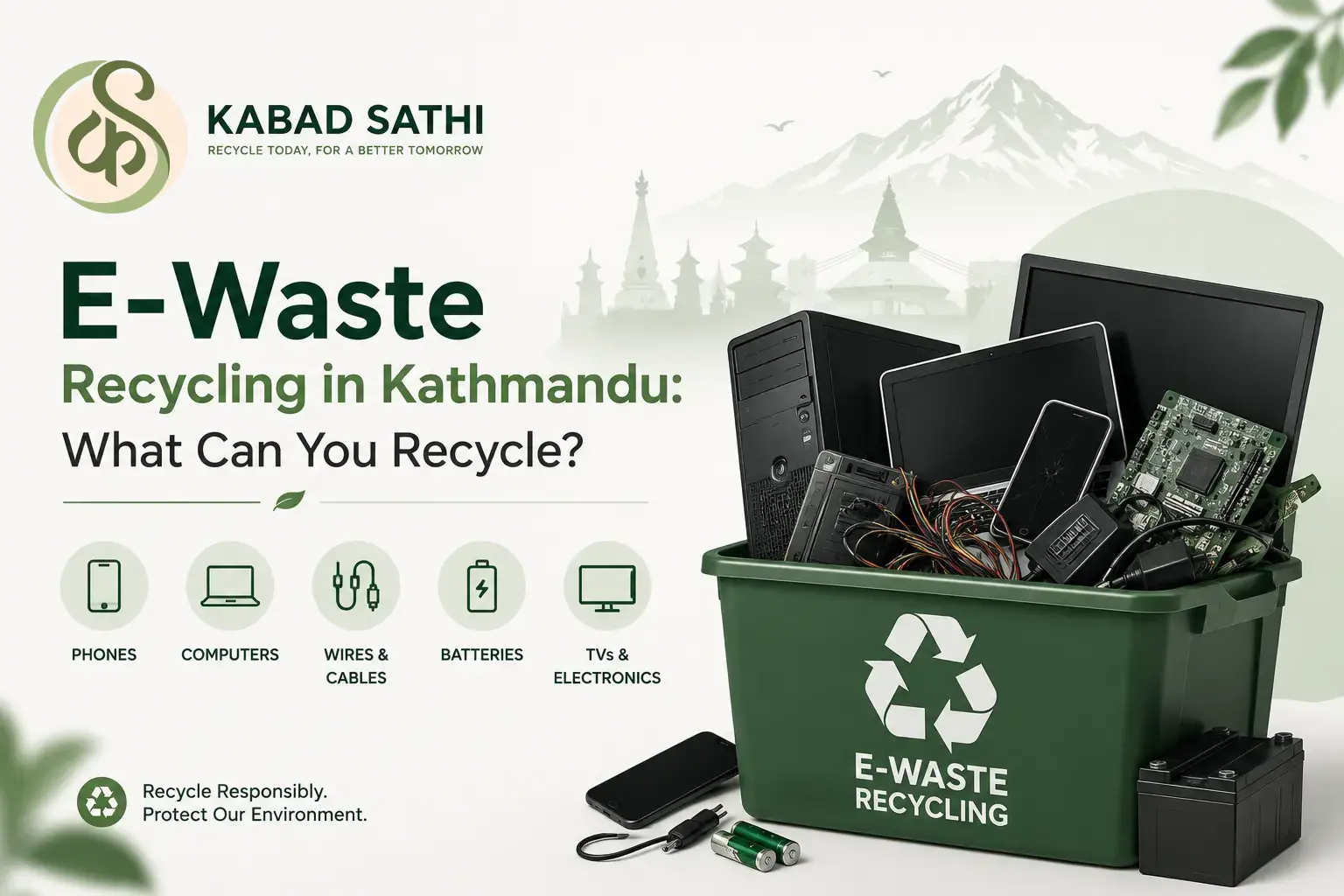
E-Waste Recycling in Kathmandu: What Can You Recycle?
8 MIN READ · Dec 05, 2024
Old phones, computers, cables, batteries, televisions and other electronics eventually become unwanted. But unlike ordinary household waste, electronic items should not simply be thrown into a regular waste bin.
These items contain materials that can potentially be recovered and recycled, while some components require careful handling.
If you're looking for e-waste collection in Kathmandu, the first step is knowing what you have and keeping electronic items separate from your ordinary household scrap.
Kabad Sathi helps customers arrange doorstep scrap collection for a range of recyclable materials, including selected electronic waste.
What is e-waste?
E-waste, or electronic waste, refers to discarded electrical and electronic equipment and their components.
Common examples include:
- Old mobile phones
- Computers and CPUs
- Computer accessories
- Televisions
- Wires and cables
- Batteries
- CDs and other electronic media
- Photocopy machines
- Electronic appliances
- Other unwanted electrical equipment
An item doesn't have to look like a traditional electronic device to be e-waste. If it contains electronic components, a circuit board, wiring, a battery, or electrical parts, it may need to be handled separately from ordinary scrap.
Why shouldn't e-waste go into regular waste?
Electronic devices are made from a mixture of materials.
A single phone, for example, can contain:
- Metals
- Glass
- Plastic
- Circuit boards
- Batteries
- Other electronic components
Some of these materials have recycling value and can be recovered when electronic waste is properly processed.
At the same time, certain components can create environmental and handling risks if electronic waste is improperly discarded.
That is why separating e-waste from ordinary household waste is an important first step.
What electronic waste can you give for collection?
The exact items accepted can depend on their type, condition, quantity and current collection requirements.
Common e-waste categories include:
Mobile phones and accessories
Old smartphones, feature phones, chargers and related accessories can accumulate quickly in homes and offices.
Instead of leaving unused devices in a drawer indefinitely, you can separate them from your other household scrap and arrange an appropriate collection.
Computers and CPUs
Old CPUs, computer components and accessories contain a mixture of metals, plastics and electronic components.
If you have outdated computer equipment taking up storage space, keep it separate from paper, cardboard and ordinary household waste.
Televisions
Old televisions are another common source of electronic waste.
Because televisions contain multiple components and can be bulky, they may require assessment before collection.
Wires and cables
Don't assume that every wire has the same scrap value.
Different cables can contain different materials and quantities of metal. Copper-containing cables, for example, can differ considerably from other types of wiring.
For this reason, wires and cables may require inspection before their value can be determined.
Batteries
Batteries should be kept separate from ordinary household scrap.
Different batteries have different chemistries, designs and conditions, so they should be handled appropriately rather than mixed with paper, plastic or general metal waste.
Photocopy machines and electronic appliances
Old photocopy machines and other electronic appliances can contain a combination of metal, plastic, wiring and electronic components.
Because these items vary significantly in size and condition, they may require inspection before a price can be determined.
How do I know if something is e-waste?
A simple rule is useful:
If an item requires electricity, contains electronic components, or operates using a battery, consider whether it should be separated as e-waste.
For example:
- Mobile phone → e-waste
- Computer → e-waste
- Television → e-waste
- Battery → e-waste
- Electrical cable → electronic/electrical waste
- Old photocopy machine → e-waste
- Circuit board → e-waste
When you're unsure, it is better to keep the item separate and ask the collector rather than mixing it with ordinary recyclable materials.
How should you prepare e-waste before pickup?
You don't need to dismantle electronic devices yourself.
In fact, unnecessary dismantling can make collection and handling more difficult.
Instead:
1. Keep electronics separate
Create a separate pile or box for electronic items rather than mixing them with paper, cardboard and other household scrap.
2. Keep batteries separate
If you have loose batteries, keep them away from ordinary scrap and other materials.
3. Gather cables together
Put old chargers, cables and wires in one place so they are easy to identify during collection.
4. Keep larger electronics accessible
If you have an old television, computer, photocopy machine or appliance, make sure the collector can access it without having to move large amounts of unrelated household material.
5. Don't dismantle devices unnecessarily
Leave electronic devices intact unless there is a specific reason to do otherwise.
Does e-waste have scrap value?
Yes, some electronic waste has recoverable material value.
However, there isn't one fixed price for all e-waste.
The value can depend on:
- Type of device
- Material composition
- Weight
- Condition
- Quantity
- Recoverable components
- Current market conditions
For example, a bundle of cables and an old mobile phone may both be classified as e-waste, but their material composition and value can be very different.
Some items may therefore require inspection before a price can be provided.
E-waste recycling in Kathmandu
Kathmandu households and businesses generate a wide variety of discarded electronic equipment.
Old phones are replaced. Computers become outdated. Cables accumulate in drawers. Printers and photocopy machines eventually stop being useful. Batteries are left behind after devices are replaced.
Rather than allowing these items to remain stored indefinitely or mixing them with ordinary household waste, separating electronic waste makes it easier to direct it toward appropriate collection and recycling channels.
If you're searching for e-waste collection in Kathmandu, keeping your electronics together and arranging a doorstep collection can be a convenient alternative to transporting everything yourself.
Why proper e-waste collection matters
Electronic devices contain materials that can potentially be recovered and reused.
Metals in electronic equipment, for example, can have significant value when properly recovered.
Responsible collection also helps prevent electronic items from being mixed indiscriminately with ordinary household waste.
The important thing is not to become an electronics recycling expert overnight.
Simply identifying electronic waste, keeping it separate and giving it to an appropriate collection service is already a useful step.
Can Kabad Sathi collect e-waste from my home?
Kabad Sathi provides doorstep scrap collection in Kathmandu for a range of recyclable materials, including selected electronic waste.
Some electronic items can be assessed as part of the normal collection process, while larger appliances, batteries, wires or other specialised items may require inspection.
If you have a large or unusual electronic item, provide its details when arranging your pickup so that the collection can be handled appropriately.
E-waste collection for offices and businesses
Businesses can accumulate considerably more electronic waste than an average household.
Offices may have:
- Old computers
- CPUs
- Monitors
- Keyboards and accessories
- Wires and cables
- Printers
- Photocopy machines
- Old phones
- Batteries
- Other electronic equipment
Instead of allowing obsolete equipment to occupy storage space, businesses can separate their electronic waste and arrange an appropriate scrap collection.
For larger quantities, contact Kabad Sathi to discuss the collection requirements.
Frequently Asked Questions
Where can I recycle e-waste in Kathmandu?
You can arrange e-waste collection through an appropriate recycling or scrap collection service in Kathmandu. Kabad Sathi provides doorstep scrap collection for selected electronic waste categories.
What is considered e-waste?
Old phones, computers, televisions, cables, batteries, circuit boards, photocopy machines and many other electrical or electronic devices can be considered e-waste.
Can I sell old electronics as scrap?
Some old electronic items have recoverable scrap value. The amount depends on the device, material composition, condition, weight and current market conditions. Some items may require inspection.
Can I recycle old mobile phones?
Old mobile phones can be separated as e-waste and arranged for appropriate collection. Remove personal data from a device before handing it over.
What should I do with old batteries?
Keep batteries separate from ordinary household scrap and avoid mixing them with paper, cardboard or other recyclable materials. Ask the collection service about the appropriate handling process.
Are wires and cables recyclable?
Yes. Wires and cables contain recoverable materials, but their value varies depending on their construction and material composition. They may need to be inspected before pricing.
Can Kabad Sathi collect electronic waste from offices?
Kabad Sathi can arrange doorstep scrap collection for selected electronic waste and recyclable materials. For larger quantities or specialised equipment, contact the team before scheduling collection.
Ready to clear out your old electronics?
Don't let unused phones, cables, computers, batteries and appliances continue taking up valuable space.
Separate your electronic waste from your ordinary household scrap and arrange a doorstep scrap pickup in Kathmandu with Kabad Sathi.