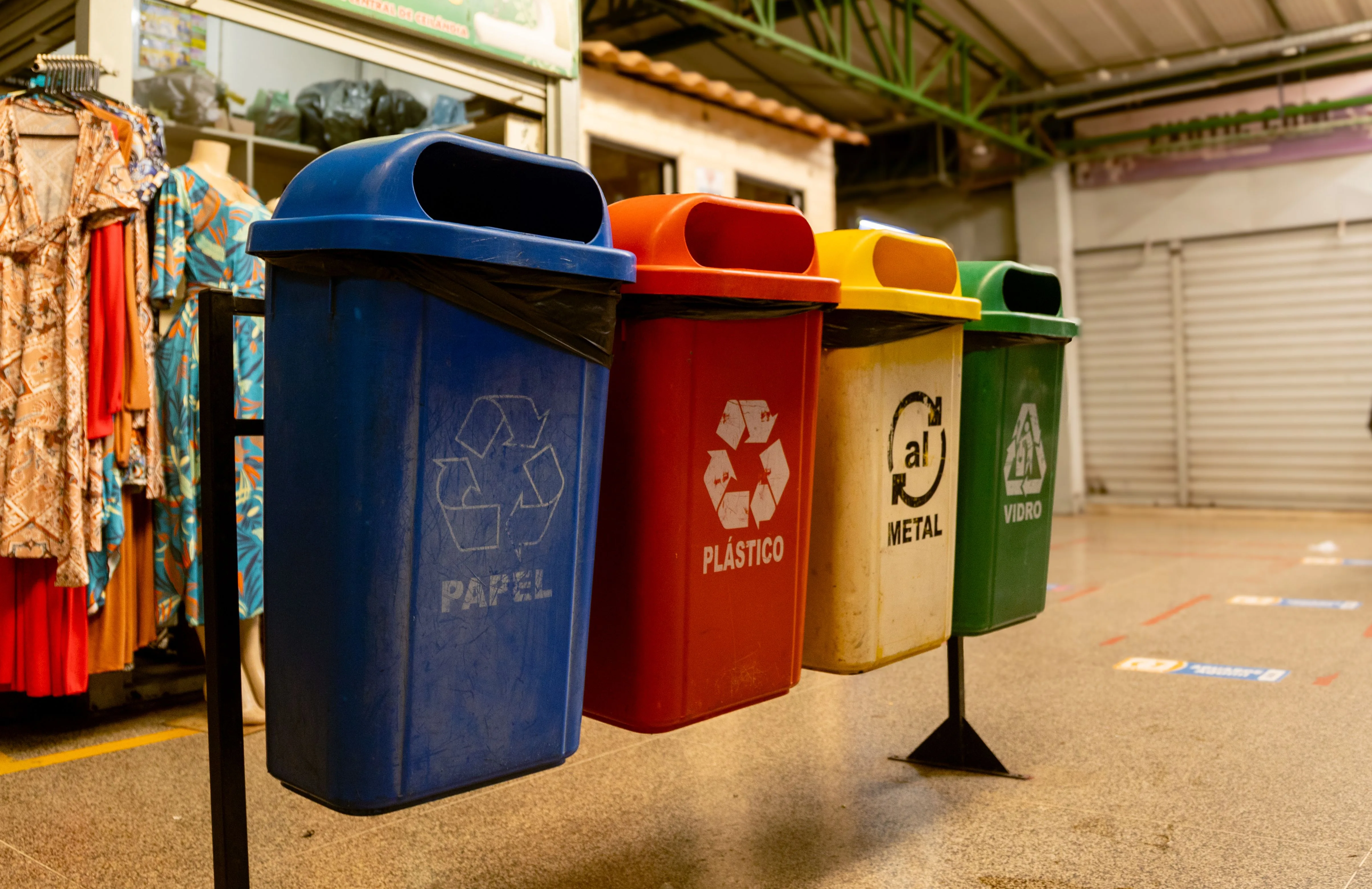
Paper, Metal, or E-Waste? Sorting Your Scrap Right
7 MIN READ · Mar 12, 2025
Ask someone to sort their household scrap and most will get through paper and metal without hesitating, then stall completely the moment something doesn't obviously belong to either — a laminated invitation card, a battery, an old showerhead. That hesitation is normal. Scrap categories aren't defined by what an object is so much as by what happens to it after collection, and that distinction only becomes intuitive once you've seen where each category actually goes.
Here's the logic behind the categories we use, so the next time something ambiguous turns up in a drawer, you'll already know where it belongs.
Paper: less about the material, more about the coating
Newspaper, cardboard, books, and office paper all pulp down the same way, which is why they're grouped together regardless of how different they look. The exception is anything with a heavy coating or lamination — glossy invitation cards, for instance, still count as paper, but they're priced slightly differently than plain newsprint because the coating changes how they process. Confidential documents fall in this category too, and if that's what you're clearing out, it's worth mentioning it when you book so the collector knows to handle it accordingly rather than assuming it's ordinary office paper.
The one genuine exception is anything paper-adjacent that's actually plastic-coated packaging, like some snack wrappers — those behave more like plastic in processing and shouldn't go in with your paper pile.
Metal: the category with the widest price range
This is where sorting matters most, because "metal" spans everything from a soda can to a copper pipe, and the price difference between those two is not small. Aluminum, steel, and copper each get priced separately, which means a mixed pile of all three doesn't get the best-case price for any of them — it gets priced closer to whichever is least valuable, because separating them afterward is work someone has to be paid for.
If you're only going to sort one category before your pickup, make it this one. A few minutes separating cans from pipes from any copper wiring you have is the single highest-return sorting task available to you.
Glass: mostly about what's inside, not the glass itself
Bottles are bottles, whether they held water, shampoo, or something stronger — the glass itself doesn't care. What matters is making sure containers are reasonably empty and rinsed. A bottle with liquid still inside adds weight that isn't glass and can't be priced as glass, and depending on what that liquid is, it can also make the load messier to handle safely.
E-waste: the category that actually needs the most care
Electronics get their own category because they can't simply be melted down or pulped like the others — CDs, mobile phones, and old televisions each contain a mix of materials that have to be separated before any of it can be recovered. This is also the category most likely to include items that need inspection rather than a phone-quoted price: wires and batteries in particular, since their value and handling depend heavily on condition and type.
If you're not sure whether something counts as e-waste, a reasonable rule of thumb is to ask whether it has a circuit board or a battery. If yes, it belongs here, not in general metal — even if the outer casing is mostly plastic or aluminum.
Everything else, and why "Others" isn't a shrug
Auto parts, tires, sacks, and large appliances like gas geysers end up in a catch-all category, but that doesn't mean they're priced carelessly — it means they're priced individually, because there's no meaningful average price for "car parts" the way there is for "steel." These are almost always inspection items, and the more accessible you make them for the collector to look at, the more accurate the quote you'll get.
Sorting is optional, but it isn't neutral
None of this sorting is required to book a pickup — we'll take a completely mixed load and sort it ourselves. But sorting isn't just a courtesy either; it's the fastest way to make sure you're not quietly subsidizing the sorting cost out of your own payout. Ten minutes with a few boxes on the floor is usually the difference between an average price and a good one.